Have an account?Log in
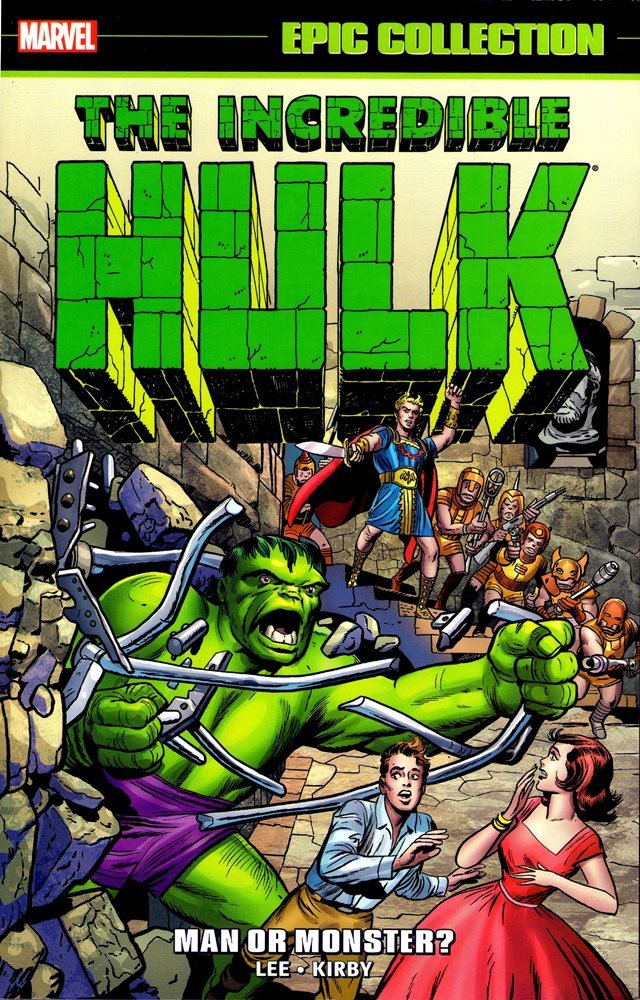
The Incredible Hulk Epic Collection
Additional info
English (United States) · Marvel Comics
Plot
Collects Incredible Hulk (1962) #1-6, Fantastic Four (1961) #12, 25-26, Avengers (1963) #1-3, 5, Amazing Spider-Man (1963) #14, Tales to Astonish (1959) #59 and material from Journey Into Mystery (1952) #112.
Dr. Robert Bruce Banner may look like a mild-mannered scientist, but after being caught in a gamma-bomb explosion, he became the unstoppable engine of destruction known as the Hulk! Stan Lee and Jack Kirby's atomic update on the Dr. Jekyll/Mr. Hyde paradigm mixed the might of giant monsters with Cold War intrigue and psychological drama. Decades later, it's a formula that still has readers clamoring for more! For the first time, this Epic Collection follows Hulk's every adventure: his original series, his time fighting alongside — and against — the Avengers, his first confrontation with the Thing, encounters with Spider-Man and Ant-Man, and a mythic battle with Thor!
View more
Publication date
June 8, 2016
ISBN / Barcode
This comic is on these lists
What readers say
3,3
3.3 3
demosalon3 has rated33/12/2025

incrediblespider3diego has rated411/23/2023
The content of this page is licensed under a Creative Commons 4.0 Share Alike license, except for comic images that are the property of their respective authors and publishers. We waive the right of attribution. More info.
mister_pozart has rated35/14/2019
Hulk fue un caso extraño porque empezó con cabecera propia (al contrario que Thor, Iron Man o Captain America), aventura que duró solo 6 números en los que además la mitología del personaje no se estableció claramente. Así, cómo se desencadena el cambio Banner/Hulk, qué nivel de consciencia e inteligencia tiene Hulk, o incluso su color y tamaño fueron aspectos que dieron varios bandazos en esos tiempos. El tomo se completa con diferentes apariciones de Hulk en otras series hasta que volvió a la regularidad en Tales to Astonish. A día de hoy su lectura es durilla, y básicamente recomiendo leer solo los diálogos y hacer una lectura en diagonal de los textos de apoyo, que en el 90% de los casos cuentan lo que se ve en la viñeta. En cuanto al dibujo, clasicote pero correcto.